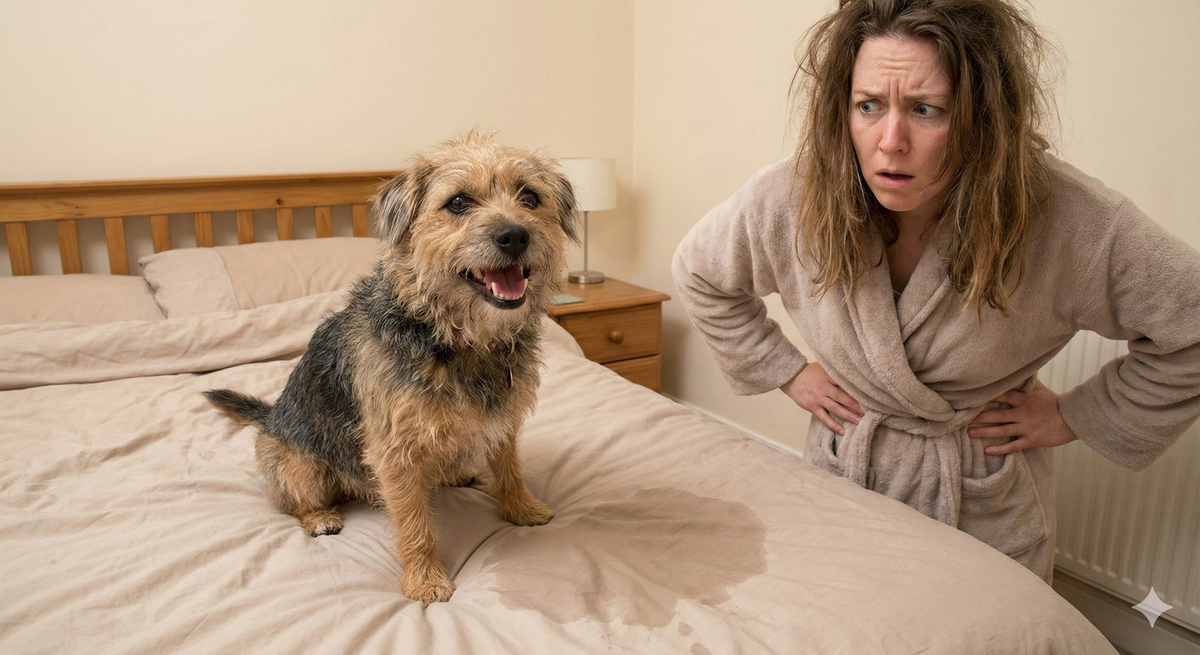
You walk into your room expecting a cozy moment on your bed, only to spot a suspicious wet patch that was not there earlier. Your dog looks up with innocent eyes, and you are left wondering how a house-trained pup could surprise you like this. It is a moment many dog owners know all too well, whether they are raising young dogs, senior dogs, or rescue dogs still adjusting to a new home.
Veterinarians often mention that urinary accidents rank among the most common behavior complaints. Stress, anxiety, marking behavior, and medical issues can all trigger a dog to suddenly start peeing where they normally would not. Your bed becomes a target because it carries your smell and feels like a safe space where your dog feels secure.
This guide breaks down the underlying reason behind peeing on your bed in a simple, reassuring way. Stay with us as we explore what might be going on.
Medical Reasons Your Dog Peed on the Bed
1. Urinary Tract Infections & Bladder Irritation
Seeing dog urine on your bed can feel frustrating and unfamiliar, especially when your dog normally has solid housetraining. When a dog suddenly starts peeing where they sleep or relax, a urinary tract infection is often one of the first medical issues veterinarians consider.

UTIs create a strong and urgent need to pee, and your dog may rush toward the closest soft, inviting space. Beds absorb liquid quickly and smell like you, so they feel like a place where your dog can release that sudden pressure.
Dogs experiencing a UTI typically show clear changes in their behavior. You might notice
-
Frequent licking around the urinary area
-
Whining or discomfort during peeing
-
Dribbling that happens without control
-
A full puddle of urine on the bed instead of small droplets
Full bladder emptying usually suggests a medical cause, while tiny marks in several spots resemble marking behavior. This distinction matters because medical urgency often overwhelms bladder control even in well-trained dogs.
A UTI can also influence urination frequency. Some dogs begin pacing, acting restless, or trying to pee again shortly after coming inside. Senior dogs and young dogs may struggle the most because their bladder control is already sensitive to routine changes or irritation.
When accidents happen on owners' beds or other soft surfaces, the urgency often gives them no time to reach their toilet spot.
If you see these signs, a visit to a veterinarian is the safest next step. UTIs and bladder irritation do not improve with home tricks, and delaying care can make your dog’s discomfort worse.
2. Bladder Stones or Crystals
It can feel surprising when your dog curls up beside you and ends up leaving a wet patch on the bed. When accidents appear in places your dog usually treats gently, bladder stones or crystals may be the underlying reason. These conditions irritate the bladder, create pressure, and make it difficult for your dog to hold urine even for short periods.
The internal discomfort caused by stones often leads to sudden and urgent urination. Many dogs urinate in familiar spots because they feel secure there, which is why urinating on your bed can occur before they reach their designated toilet spot. This differs from marking behavior or stress-related urination because stones physically interfere with bladder control.
You may notice signs that stand out during your dog’s routine, such as
• blood mixed with urine
• crying or tensing up during attempts to pee
• accidents in multiple areas of the house rather than one specific location
These symptoms point strongly to a medical issue rather than behavior or housetraining concerns. If you see any of these patterns, a visit to a veterinarian is the next immediate step. Bladder stones and crystals need professional diagnosis and should never be managed with home remedies or guesswork.
3. Age-Related or Hormonal Incontinence
Some accidents feel especially unexpected, like the moments when your dog wakes from a nap looking confused about the wet spot beneath them. When this happens during sleep or deep rest, age-related or hormonal incontinence may be the cause.
Senior dogs and certain spayed females may experience weakened sphincter muscles, which can make it harder to contain urine, even when they are relaxed indoors.

This type of urination is not based on behavior or emotion. It happens because the muscles responsible for holding urine lose strength over time. Dogs often rest longest in warm, comfortable places, which is why the bed becomes a common location for these incidents. They are not choosing to pee there. The bladder simply releases small amounts of urine while they are asleep or just waking up.
You might notice patterns such as damp fur, small wet circles where your dog was lying, or occasional leaks when they rise from a nap. These changes differ from anxious peeing, marking behavior, or housetraining issues because your dog is unaware that it is happening.
4. Underlying Illnesses: Diabetes, Kidney Disease, Cushing’s
It can feel puzzling when a dog with a steady routine suddenly leaves larger puddles on the bed or around the house.
When this shift appears alongside changes in thirst, illnesses such as diabetes, kidney disease, or Cushing’s syndrome may be involved. These conditions cause dogs to drink far more water than usual, which naturally leads to increased urination and less control over bladder volume.
A dog dealing with one of these illnesses may not be able to reach their toilet spot in time. The bladder fills faster than normal, and accidents occur simply because the body is overwhelmed. Many dog owners notice these episodes in relaxing areas like the bed, where dogs settle for longer periods.
There are signs that help you tell the difference between illness and behavior. You may see
-
Excessive drinking throughout the day
-
Gradual weight loss despite eating normally
-
Tiredness or low energy that differs from their usual behavior
These symptoms point to medical conditions rather than housetraining issues, marking behavior, or stress. Before assuming the problem is emotional or behavioral, a veterinarian should rule out underlying health issues.
Early diagnosis gives you clarity about what is truly causing the accidents and ensures your dog receives proper care.
Behavioral & Emotional Reasons Dogs Pee on the Bed
1. Anxiety or Stress Triggering Accidents
There are times when a dog’s emotions show up in surprising ways, and one of the clearest signs is an accident in a place they normally treat with care. Beds become a target during stressful moments, not because your dog prefers them for peeing, but because the scent and softness create an instant sense of relief.
When anxiety rises, bladder control drops, and the bed becomes the closest space that feels safe enough to let go.
Stress-related urination is involuntary for many dogs. Sudden changes in your dog’s world can shake their confidence, and the buildup can spill over into their behavior.

A disrupted schedule, a recent move, the arrival of other animals, or tension inside the home can all make your dog feel insecure. Loud noises also play a major role. Dogs startled by storms or fireworks may retreat to your bed seeking comfort, only to lose control once they settle.
These accidents often appear right after emotional spikes. A dog might return to your room after hours of alone time and release urine simply because the stress has been building.
Another dog may climb onto the bed after a thunderstorm and pee without any intention behind it. These patterns suggest emotional overwhelm rather than house training issues or marking behavior.
If stress seems to be the underlying reason, helping your dog feel secure, supported, and grounded becomes the first step toward change.
2. Separation Anxiety
Some dogs struggle the moment the house goes quiet, and their behavior shifts the second you step outside.
When separation anxiety takes hold, your bed often becomes the emotional anchor they cling to. It smells like you, feels familiar, and offers comfort when they are unsure how long you will be gone. In that overwhelmed state, peeing on your bed becomes less about choice and more about panic bubbling over.
Accidents connected to separation anxiety usually happen soon after the door closes behind you. Your dog may hold it perfectly overnight or throughout the day when you are home, yet lose control minutes after you leave. The anxiety disrupts bladder control in the same way fear might make a person feel an urgent need to use the bathroom.
You may also notice signs that appear before or after the accident, such as
-
Pacing between rooms
-
Whining or barking as you head out
-
Scratching at the bedroom door or entry doors
-
Chewed objects near exits or windows
These clues indicate that the issue extends beyond house training or marking behavior. When your dog feels intense distress about being alone, the bed becomes both the comfort zone and the place where accidents happen.
Addressing separation anxiety gently and consistently helps reduce these emotionally driven incidents.
3. Territorial Marking
There are moments when the accident on your bed does not look like an accident at all. Instead of a full puddle, you might find tiny drips on a pillow or a few drops along the blanket’s edge. When the pattern looks this specific, territorial marking often comes into the picture.
Dogs use scent to communicate, and your bed becomes a canvas simply because it carries your smell more strongly than anything else in the house.
Marking typically appears after a change in the environment. A visiting friend, a new pet, or even a shift in the household’s overall scent can make your dog feel the need to reestablish their place. These changes can stir subtle insecurity, and the response shows up as small squirts rather than full urination.
Both male and female dogs can exhibit this behavior, and intact males tend to show it more strongly, although it occurs across all ages.
You may notice the markings in very specific areas. Some dogs target corners of blankets, pillows, or the outer edges of the bed instead of the central area. These precise spots help distinguish marking behavior from housetraining issues or stress-related accidents.
When small droplets appear instead of full bladder emptying, it often signals that your dog is responding to environmental shifts rather than struggling with physical control.
4. Submissive or Excitement Urination
Some dogs greet the world with their whole body, and sometimes their bladder joins in without warning.
One moment, they leap onto the bed to say hello, and the next, you spot a small wet patch that appeared in the middle of all that enthusiasm. This type of peeing is not a conscious choice. It is a reflex tied to emotion, energy, and social signals your dog is responding to in real time.
Submissive urination typically happens when a dog feels unsure or wants to show they mean no harm. Their body language often reveals this before any urine appears. You might notice
• ears drawn back
• gentle squinting or turning the head away
• rolling slightly onto their side
• a tightly tucked tail
These behaviors communicate appeasement, and the release of urine is simply part of that instinctive response. It is brief, involuntary, and unrelated to housetraining or marking behavior.
Excitement urination has a different energetic feel. Puppies, adolescent dogs, and some very social adults may pee when joy overwhelms their bladder control. If your dog bounds onto the bed in the heat of the moment, the leak follows them there.
5. Weak House Training or Mislearning Soft Surfaces
A dog’s paws tell them more than you might expect. When they step onto something soft, some dogs instantly recall the very first place they were taught to pee. If that early lesson happened on cushy pads or fabric-like surfaces, your bed can unintentionally feel like the same invitation.
To your dog, it is not misbehavior. It is muscle memory.
Homes are full of textures that reinforce this confusion. A comforter, a bath mat, or a clothing pile can feel nearly identical to the training spots puppies start with. Without careful guidance, that early imprint turns into a long-lasting habit.
Young dogs and even well-meaning adults may revert to peeing on the bed simply because their paws recognize a familiar surface.
Inconsistent routines add another layer to the problem. Dogs thrive on patterns, and when potty schedules shift or crate structure fades, they often fall back on the surface that once worked for them. Many dog owners notice this when blankets or soft rugs become unintended bathroom spots.
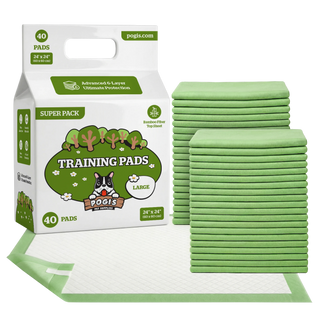
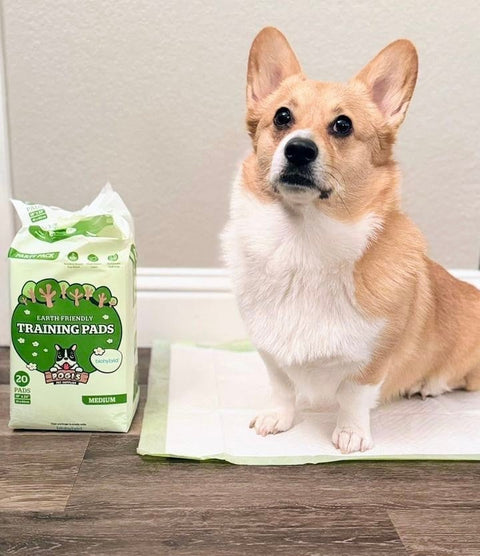
The good news is that this type of mislearning is one of the easiest to fix. Giving your dog one clear, designated potty area helps reset their understanding. A consistent setup with dependable pads, like Pogi’s training pads, teaches your dog exactly where to go and rebuilds those bathroom habits with clarity.
Why Your Dog Chooses the Bed Specifically?
1. Your Scent Feels Safe
Dogs rely heavily on scent to understand their world, and your scent is the one that brings them the most comfort. When your dog feels overwhelmed, unsure, or emotionally charged, they often search for something that reminds them of safety. The bed becomes that place instantly because it holds your smell far more strongly than any other spot in the house.
During moments of emotional overload, some dogs lose control of their bladder without realizing it. They may climb onto the bed looking for reassurance, then release urine simply because their body is reacting to stress. This is especially common in dogs that experience anxiety, loud noises, or sudden changes in routine.

Beds naturally trap and retain scent because of the layers of fabric, blankets, and pillows. Unlike hard floors, which do not hold smells, the bed feels like a familiar refuge. That sense of closeness can lead your dog to settle there, and if their emotions are high, the accident follows.
2. Soft Surfaces Encourage Urination
Some dogs gravitate toward soft materials when they need to pee, especially puppies and dogs who never fully mastered housetraining. Cushy textures give them the same feedback they felt during early potty experiences.
For a young or undertrained dog, the bed can “feel right” simply because it mimics the softness of carpet, blankets, or even the surfaces they once used during potty training. When their paws sense something absorbent, their body follows an old habit without much thought.
Beds also offer the kind of texture that feels familiar to dogs who learned to pee on indoor pads. The plush surface absorbs quickly, so the dog feels little splashback or discomfort. That sensory experience can lead them to treat the bed as an acceptable bathroom spot, even when they know outdoor potty routines well.
3. Previous Odor Residue Reinforces the Spot
Dogs have a far sharper sense of smell than humans, so even a tiny amount of dried urine that you cannot detect can send a strong message to them.
Once urine lands on the bed, the odor creates a signal that marks the area as a previous bathroom spot. A dog will often return to the same location because the scent triggers the same behavior, especially if the accident happened during stress or confusion.
This is why enzymatic cleaning becomes essential. Regular cleaners may mask the scent for humans, but they do not break the chemical markers that dogs rely on. Only an enzymatic formula can fully remove the odor cues that keep pulling your dog back to the bed.
Join Pogi’s Pack
A cleaner spot indoors
Get 15% off a one-time purchase
One use per customer. Subscription items excluded. Cannot be combined with other discounts.
Offer sent by email. Unsubscribe anytime.
How to Narrow Down the Cause (Diagnostic Checklist)
Identifying why your dog is peeing on the bed becomes clearer when you look at patterns rather than the accident alone. This checklist helps you evaluate what you are seeing without stepping into a diagnosis.
1. Is it a Full Puddle or a Small Spot?
A full puddle often points to a toileting issue, a possible medical concern, or incomplete training. Small drips or quick droplets usually align with marking behavior or excitement urination.
2. Is Your Dog Also Peeing in Other Places?
Wet spots appearing across carpets, corners, or hallways often suggest a medical issue. If the bed is the only place affected, anxiety or marking becomes more likely.
3. Did Anything Change Recently?
Changes such as a new pet, a move, travel, or a shift in your work hours can create enough stress to cause sudden indoor accidents. Dogs express emotional tension through their urination habits more than many owners realize.
4. Has Your Dog Always Struggled With House Training?
If soft surface accidents have been common from puppyhood, the issue may be tied to early potty training rather than behavior or defiance.
5. Is Your Dog Drinking More Water Than Usual?
Higher water intake can overwhelm bladder control and may point toward conditions like diabetes or kidney disease.
Keep this checklist as a self-reflection tool. It helps you recognize patterns, but only a veterinarian can confirm medical causes.
How to Stop Your Dog From Peeing on the Bed?
Rule Out Medical Issues First
The first step in solving bed-related accidents is making sure your dog is physically healthy. When a dog that normally follows their routine suddenly starts peeing inside or leaves larger puddles on the bed, a vet visit becomes essential.
Medical issues such as urinary tract infections, kidney disease, or bladder irritation can disrupt bladder control in ways that training cannot fix.
Behavior solutions only work when the body is functioning properly. If discomfort, inflammation, or excessive thirst is driving the accidents, no amount of consistent training or scheduled potty breaks will fully stop the problem. A veterinarian can help identify whether a health condition is contributing to the change in urination habits and give you clarity before you move on to training-based steps.
Once medical causes are ruled out, retraining becomes far more effective and predictable for both you and your dog.
Re-establish Potty Training Routines
A steady schedule is one of the fastest ways to prevent accidents on the bed. Set clear bathroom times throughout the day, such as mornings, after meals, after naps, and before bedtime. These predictable moments help regulate your dog’s bladder and reduce the chances of indoor accidents.
Reinforce every correct bathroom trip with calm praise. Gentle encouragement helps your dog build confidence without overwhelming them, especially if they already struggle with anxiety or excitement.

When you cannot supervise, short periods in a crate or playpen can prevent your dog from wandering onto soft surfaces. This controlled setup supports good habits while keeping your dog from slipping back into old patterns.
With consistency, your dog begins to rely on the routine and naturally chooses the appropriate toilet spot.
Use Pogis Training Pads to Redirect Bathroom Behavior
Training pads help your dog understand exactly where they should pee, which stops them from wandering toward the bed when they feel the urge.
A consistent target zone removes guesswork and replaces soft surface confusion with a clear routine. This approach works well for puppies, apartment living, retraining adult dogs, and dogs who struggle with nighttime bladder control.
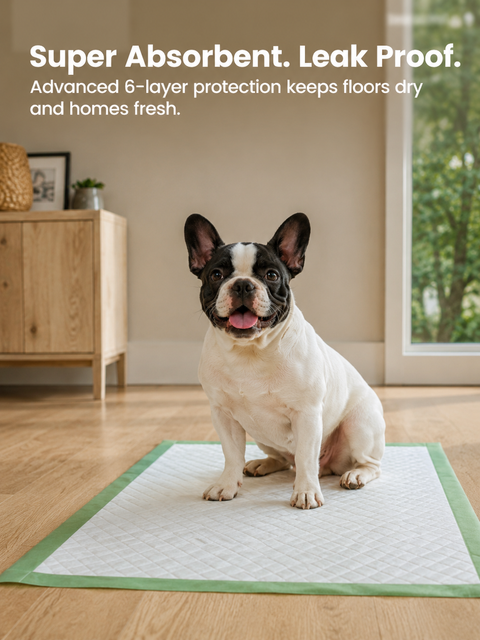
Pogis training pads make this transition easier because they offer
-
A large surface area that gives dogs room to position comfortably
-
Fast absorption that prevents spreading and tracking
-
Unscented materials that keep the home feeling fresh
To redirect your dog’s behavior, start by placing a pad near the bed. This interrupts their usual path and offers a soft surface that is actually appropriate. Once they begin choosing the pad reliably, move it gradually away from the bed and closer to your preferred toilet spot.
Pogis pads also teach a valuable lesson: this is the only soft surface meant for urination. That clarity reduces mistakes on blankets, rugs, and bedding and helps dogs rebuild strong bathroom habits. They are especially helpful at night when some dogs cannot comfortably hold it until morning.
Prevent Access to the Bed Temporarily
Limiting access to the bed gives your dog fewer chances to repeat the habit while you work on retraining. Simple barriers help break the cycle. You can block entry with baby gates, keep the bedroom door closed when you are not nearby, or use short periods of crate rest until your dog’s bathroom routine becomes steady again.
During this phase, allow access to the bed only when you can supervise. This protects the space from accidents and reinforces the new habits you are building through structured potty schedules and training pads.
Once your dog shows reliable progress, you can gradually reopen the space with more confidence.
Reduce Anxiety Triggers
Lowering your dog’s overall stress level makes a noticeable difference in preventing bed accidents. A predictable daily rhythm helps your dog feel secure, so keep feeding times, walks, and bathroom breaks steady. A calm environment also supports better bladder control, especially for dogs sensitive to loud noises or sudden changes.
Enrichment plays a key role in easing anxiety. Offer activities that keep your dog mentally and emotionally satisfied, such as
-
Durable chew toys
-
Slow-paced sniff walks
-
Puzzle feeders that challenge the mind
More physical activity can also help. Extra exercise burns nervous energy and reduces the tension that often leads to stress-based urination.
Clean Existing Odors Thoroughly
Any lingering urine smell can encourage repeat accidents, even when humans cannot detect it. Dogs rely heavily on scent, and one trace of odor can pull them right back to the bed. Breaking that cycle starts with the right cleaning approach.
Enzyme cleaners are essential. They break down uric acid in a way that vinegar and standard cleaning products cannot. For bedding, wash on hot and add an oxygen booster to remove deep-set smells.
If urine reaches the mattress, use an enzyme solution designed specifically for thick fabrics to neutralize the scent fully from within. This helps reset the space and prevents your dog from returning to the same spot.
Help Your Dog Build Better Habits with the Right Tools
It helps to remember that bed peeing is a solvable puzzle. Once you understand whether the root comes from health, stress, or early training, the entire situation becomes far less overwhelming. Dogs are not acting with defiance or frustration.
Most accidents come from instinct, emotion, or patterns they never fully learned. With steady guidance, a predictable routine, and a bit of patience, you can help your dog break the habit for good.
Consistency and clear cues will always be the backbone of progress. When you rule out medical concerns, clean lingering odors, and give your dog a designated place to go, their confidence grows, and accidents become less frequent. Small adjustments add up quickly when the environment feels safe and structured.
Pogis training pads can make those adjustments even easier. Their fast absorption, roomy surface, and a leak-proof backing give your dog a dependable place to pee while habits shift in the right direction. They are great for puppies learning the basics, adult dogs retraining soft surface confusion, and pets who need nighttime support.
If you are ready to turn stressful accidents into predictable routines, take a look at Pogis Training Pads. They help create bathroom habits that stick, so your home stays cleaner, and your dog feels more secure.
FAQs
Why did my well-trained dog suddenly pee on my bed?
A sudden accident on the bed usually points to stress, anxiety, or underlying health issues rather than disobedience. When a dog suddenly starts peeing on soft surfaces, it can be linked to urinary tract infections, bladder control problems, or emotional triggers like loud noises, new pets, or changes in the dog’s routine. Because the bed smells strongly like you, it becomes a safe space during these moments. A quick check for other accidents, urination frequency, or changes in drinking habits can help guide your next steps.
Does peeing on my bed mean my dog is angry at me?
Dogs do not pee out of anger or spite. Peeing on your bed usually happens because your scent feels comforting when your dog feels insecure, stressed, or overwhelmed. Anxiety, separation issues, or sudden emotional changes can affect bladder control, especially in young dogs, senior dogs, or rescue dogs. When this behavior appears, it reflects your dog’s emotional state, not a desire to punish you. Understanding the underlying reason helps you support your dog without assuming intentional behavior.
How can I tell if my dog peed on my bed due to a medical issue?
Medical issues often cause full puddles, increased urination frequency, dribble urine, or accidents in multiple parts of the house. Conditions like urinary tract infections, bladder irritation, kidney disease, or diabetes can overwhelm bladder control. If your dog shows signs like painful peeing, drinking more water, weight changes, or lethargy, it is time to visit a veterinarian. Behavioral bed peeing usually appears only on the bed, while medical accidents spread to other soft surfaces or happen throughout the house.
Is it normal for anxious dogs to pee on their owner’s bed?
Yes. Anxiety can lower bladder control and lead to peeing on your bed because it holds your scent and makes your dog feel secure. Dogs experiencing separation anxiety, fear of loud noises, or emotional pressure may urinate accidentally when trying to self-soothe. Your bed becomes the inviting space they turn to during stressful moments. This is not misbehavior. It is an emotional response linked to insecurity and the need for comfort.
Are training pads good for adult dogs or only puppies?
Training pads can help both puppies and adult dogs, especially those dealing with housetraining issues, anxiety, urination, or nighttime accidents. Adult dogs who confuse soft surfaces like beds, rugs, or blankets can benefit from a designated toilet spot that removes confusion. Pads with fast absorption and a large surface area help retrain urination habits and redirect behavior. They are also useful for apartment living, senior dogs with bladder control challenges, and dogs adjusting to new routines.
Will crate training help prevent bed accidents?
Crate training can reduce bed accidents because it teaches structure and helps regulate your dog’s access to soft surfaces. Dogs usually avoid peeing in their own bed, which encourages stronger bladder habits. During retraining, the crate provides a safe, controlled space when you cannot supervise. It is not used as punishment but as a way to prevent accidental peeing inside until your dog’s urination habits stabilize. Combined with consistent training, it can greatly reduce soft surface accidents.
Can residual urine smell on the bed cause repeat accidents?
Yes. Even small traces of dog urine that humans cannot smell can encourage repeat accidents. Dogs rely heavily on scent, and any leftover odor signals that the bed is an acceptable toilet spot. Regular cleaners do not break down the uric acid in dog urine. Only enzymatic cleaning removes the scent markers completely. If the mattress absorbed urine, a mattress-specific enzyme cleaner helps eliminate the odor and prevents your dog from returning to the same spot.
Why does my dog pee on my bed when I leave the house?
This often points to separation anxiety. When you leave, your dog may feel insecure or unsure, and your bed becomes the safe space that holds your scent. Anxiety can cause dogs to lose bladder control shortly after the owner leaves. Pacing, door scratching, whining, and peeing inside are common signs. The behavior is not attention-seeking. It is emotional distress. Structured routines, calming aids, and training pads can help your dog feel more secure.
Is my dog peeing on my bed for attention?
Most dogs do not pee for attention. Bed peeing is usually tied to stress, urination habits, anxiety, medical issues, or confusion about acceptable bathroom spots. Dogs with separation anxiety or marking behavior may release small amounts of urine without realizing it. Others feel overwhelmed by loud noises or household changes. Instead of viewing the behavior as attention seeking, look for changes in routine, emotional triggers, or signs of discomfort to understand the underlying reason.
How do I stop a dog from peeing on my bed?
Start with a vet check to rule out health problems. Then create predictable routines, supervise access to the bedroom, and use consistent training to reinforce good habits. Pogi’s training pads help redirect bathroom behavior by giving your dog a clear toilet spot that prevents soft surface confusion. Clean all previous urine odors with enzyme cleaners and reduce stress triggers through enrichment and exercise. With patience and structure, most dogs stop peeing on your bed completely.
A clean spot indoors
For puppies in training, seniors, or long workdays, Pogi’s Dog Training Pads give your dog a leak-proof spot indoors, with a quick-dry top and a backing that actually protects your floor.