
Training pad guide
Training pads: find your size and routine
Start with enough room for your dog and a consistent place to go. Then choose a pack count around the pads you actually use. Here's how to put it together.
The short version
- Choose a size that gives your dog room to stand fully on the pad. Measure the floor space where it will go.
- Keep the pad in one accessible spot, away from food and bedding. Guide your puppy there after waking, meals and play.
- Reward them just after they finish. Clean up accidents calmly and replace wet or soiled pads promptly.
- Count actual pad changes to estimate your supply. Larger pads give more coverage; check every size regularly and change it as needed.
Choose your setup
Four things to check before buying
Measure your spot, check your dog's position and choose a pack that helps you find your routine.
Room for your dog
Watch where your dog stands and turns. Allow room around their paws instead of choosing by breed or weight alone.
Space on the floor
Measure your chosen spot and compare the overall pad dimensions below. Lay the pad flat so its full surface is available.
Your first pack
Each size comes in 20-pad and 40-pad packs. A 20-pad pack lets you try the size before stocking up.
Your daily changes
Track how many pads you replace over a few days. Use that number to choose your next pack count and, if subscribing, your delivery interval.
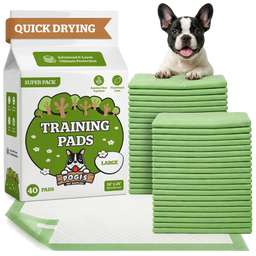
Find your size
Pogi's Dog Training Pads
Medium, Large and Extra Large, with 20-pad and 40-pad packs in each size. Check your selection for current prices.
Build the routine
Six steps to a consistent toilet spot
Pick one accessible spot
Choose a quiet place away from food and bedding. Keep it consistent so your puppy can learn where to go.
Offer regular visits
Guide your puppy there after waking, meals and play. Watch for sniffing, circling or restlessness and give them another opportunity.
Give them a quiet moment
Stay nearby and let them settle. You can use the same short cue each time; save play for afterward.
Reward after they finish
Praise and offer a small reward straight after they finish in the right place. Keep your response calm and consistent.
Reset without scolding
Replace wet or soiled pads promptly. Clean accidents with a pet-safe odor-removing cleaner, following its label directions.
Plan for your longer-term routine
If your goal is outdoor toileting, offer regular outdoor visits and reward success there too. Adjust the routine as your puppy learns, without a fixed deadline.
Side by side
Compare Pogi's three pad sizes
| Medium | Large | Extra Large | |
|---|---|---|---|
| Overall size (inches) | 18 × 24 in | 24 × 24 in | 24 × 35 in |
| Approximate size (cm) | 45 × 60 cm | 60 × 60 cm | 60 × 90 cm |
| Shape | Rectangle | Square | Longer rectangle |
| Pack choices | 20 or 40 pads | 20 or 40 pads | 20 or 40 pads |
| Choosing your space | Smallest footprint | More width than Medium | More length than Large |
Common questions
Training pads, answered
How do I help my puppy use the pad?
Keep it in one accessible spot, away from food and bedding. Guide your puppy there after waking, meals and play, and watch for signs they need to go. Reward them just after they finish on the pad. Clean accidents calmly and keep practicing. Our puppy potty-training schedule generator turns that into a plan for your day.
How many pads will I need each day?
There isn't one count that fits every household. Track your actual changes over a few days, replacing wet or soiled pads promptly. For example, a 40-pad pack at two pads a day lasts about 3 weeks. Adjust that supply estimate as your routine changes, and choose your subscription delivery interval separately.
What if my puppy misses the pad?
Check that the pad stays flat and gives your puppy room to stand fully on it. Keep the location consistent, offer regular visits and reward success. Clean nearby accidents with a pet-safe odor-removing cleaner according to its directions.
Can I use pads for an adult dog?
Pads can provide a designated indoor toilet spot for an adult dog too. Choose enough room for your dog, introduce the spot consistently and replace used pads promptly. Continue their usual opportunities to go outside.
How do I choose a pad size?
Measure the space and watch your dog's position when they go. Medium has the smallest footprint, Large adds width, and Extra Large adds length. Compare the overall dimensions above and choose enough room for your dog to stand fully on the pad. Watch how they use the first few pads and adjust the size if they need more room.
How do I move toward outdoor toileting?
Offer regular trips to a consistent outdoor spot, especially after waking, meals and play. Reward your puppy just after they finish there. If you move the indoor pad toward an exit, do it gradually while keeping it accessible. Let your puppy's progress guide the pace.
When should I change the pad?
Replace it promptly when wet or soiled, and check it regularly. How often depends on your dog's routine and the condition of the pad. Keep spare pads nearby so a fresh one is easy to put down.
Ready for the routine
Find a size that fits your setup.
Choose Medium, Large or Extra Large, then select your pack count and purchase option. Check the dimensions and current price with your selection before adding to cart.