Last updated June 2026 · Reviewed by the Pogi’s Pet Supplies team
Your dog comes barreling in from a walk, tail going, and heads straight for the couch, leaving a trail of muddy little prints across the floor. Sound familiar? Paws pick up everything outside, from mud and rain to road salt, pollen, and whatever mystery gunk is on the sidewalk. A quick paw clean after every outing keeps your floors cleaner, your dog more comfortable, and gives you a chance to spot small problems early.
Honestly, it takes less than a minute once you’ve got a routine going. Here’s how to do it, how often, and what to keep by the door so it actually happens.
Why Cleaning Your Dog’s Paws Matters
It’s about more than keeping your floors tidy, though that’s a nice bonus.
- Cleaner home: Wiping paws at the door keeps dirt, mud, and outdoor bacteria off your furniture and out of your dog’s bed.
- Less irritation: Road salt, ice melt, pollen, grass, and lawn treatments collect between the toes and can leave paws dry or itchy. Removing them quickly means your dog isn’t licking them off later.
- Early problem spotting: A daily paw check is the easiest way to catch a cut, a cracked pad, a burr, or a stuck pebble before it turns into a limp.

How Often Should You Clean Your Dog’s Paws?
There’s no single rule, but a good rhythm looks like this:
- A quick wipe after every walk.
- A more thorough clean after muddy, rainy, or snowy outings, or after walking somewhere treated with salt or chemicals.
- Indoor dogs who only step out briefly can usually get by with a wipe-down every day or two.
How to Clean Your Dog’s Paws, Step by Step
1. The Quick Daily Wipe
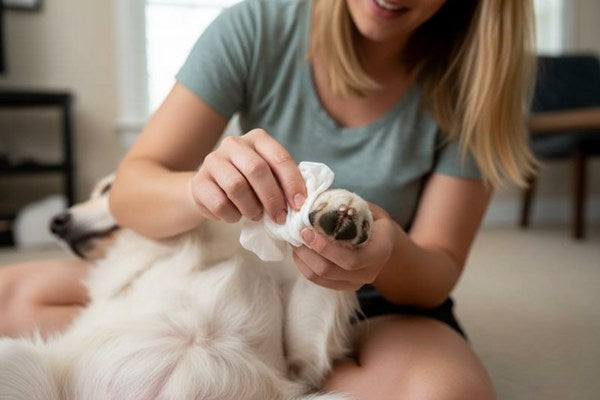
This is the one you’ll use most. For everyday dirt, a dog wipe or a damp cloth is all you need, and keeping a pack by the door makes it automatic.
- Hold each paw gently and wipe the top, the pads, and especially between the toes where debris hides.
- Don’t forget the dewclaw, higher up on the inside of the leg.
- Check the pads as you go for anything stuck, cracked, or sore.
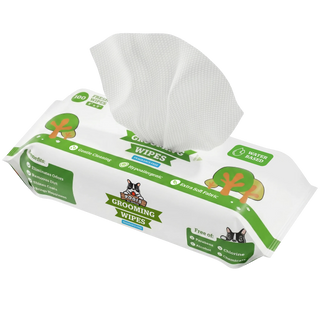
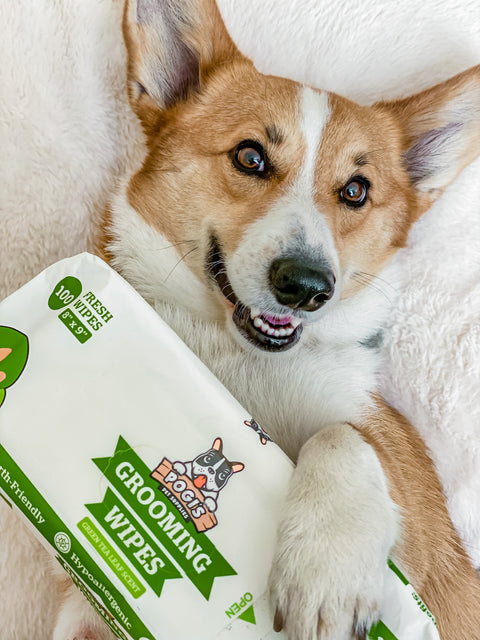
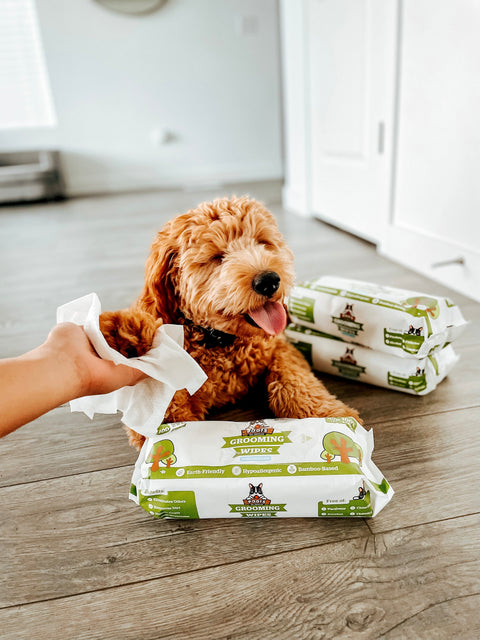
Pogi’s Dog Wipes are made for exactly this. They’re extra-large, so a single wipe usually covers all four paws, made with bamboo fiber, and come fragrance-free or with a light green tea scent if you prefer.

2. The Muddy-Paw Clean
When a quick wipe won’t cut it:
- Fill a shallow bowl or paw cup with lukewarm water.
- Dip one paw at a time and swish gently to loosen caked mud.
- Wipe clean and move to the next paw.
- For really stubborn mud, let the paw soak for a few seconds before wiping.
A doormat by the entrance and a towel within reach make this far less chaotic.
3. The Full Paw Wash
After a beach day, a long hike, or a walk through chemically treated grass, give paws a proper rinse.
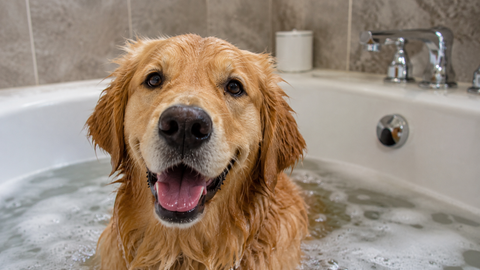
- Use lukewarm water and a small amount of dog-safe shampoo if needed.
- Work gently between the pads and toes.
- Rinse thoroughly so no soap residue is left for your dog to lick.
Do Not Skip the Drying
Damp paws, especially the skin between the toes, can lead to irritation and a musty smell. After any wash, pat each paw dry with a clean towel, gently dry between every toe, and let paws finish air-drying before your dog settles onto carpet or bedding.
Join Pogi’s Pack
Make cleanup the easy part
Get 15% off a one-time purchase
One use per customer. Subscription items excluded. Cannot be combined with other discounts.
Offer sent by email. Unsubscribe anytime.
Winter Paws Need Extra Care
Cold weather is hard on paws. Salt and ice melt sting cracked pads and aren’t safe to lick, so wipe or rinse paws as soon as you get home, and watch for redness, cracking, or limping. A thin layer of dog-safe paw balm before walks adds a protective barrier. If your dog hesitates to even go outside in the cold, our guide on helping a dog poop in the snow has more cold-weather tips.
Make Paw Cleaning Easy
The trick to actually keeping up with paw care is making it effortless. Keep a pack of wipes by the door you use most, a towel on a hook nearby, and a mat your dog steps onto on the way in. When the whole routine takes ten seconds, it sticks. Curious how dog wipes compare to the baby wipes already in your cupboard? We break down the difference in dog wipes vs baby wipes.
When to Call Your Vet
Most paw cleaning is simple upkeep, but check in with your veterinarian if you notice constant licking or chewing at one paw, pads that stay cracked, raw, or bleeding, or swelling, a bad smell, or limping that doesn’t ease. These can point to an injury, allergy, or infection that needs more than a wipe.
How to Clean Your Dog’s Paws: Frequently Asked Questions
How often should I clean my dog’s paws?
A quick wipe after every walk is ideal, with a more thorough clean after muddy, rainy, or snowy outings. Indoor dogs who only pop outside briefly are usually fine with a wipe every day or two.
Can I use baby wipes on my dog’s paws?
It’s better to use wipes made for dogs. Baby wipes can contain ingredients that aren’t meant for pets, who often lick their paws afterward, so a dog-specific wipe is the safer choice.
How do I clean between my dog’s toes?
Hold the paw gently and use a dog wipe or damp cloth to clean each gap between the toes, where mud, grass, and salt collect. Dry the area afterward, since moisture trapped between the toes can cause irritation.
What is the easiest way to clean muddy dog paws?
Keep dog wipes and a towel by your door. For caked-on mud, dip each paw in a bowl of lukewarm water, swish gently, then wipe and dry. A doormat at the entrance also cuts down the mess before it starts.
Should I clean my dog’s paws after winter walks?
Yes. Road salt and ice melt can irritate paw pads and aren’t safe for your dog to lick off, so wipe or rinse paws as soon as you come inside during winter.
Why does my dog lick their paws after a walk?
A little licking is normal grooming. Frequent or focused licking can mean something is stuck, irritation from salt or pollen, or an allergy, so clean the paw, check it over, and see your veterinarian if the licking continues.
Keep clean paws by the door
Pogi’s Dog Wipes are extra-large and gentle enough for daily use on paws, coat, and bottom, so cleanup after every walk takes seconds.