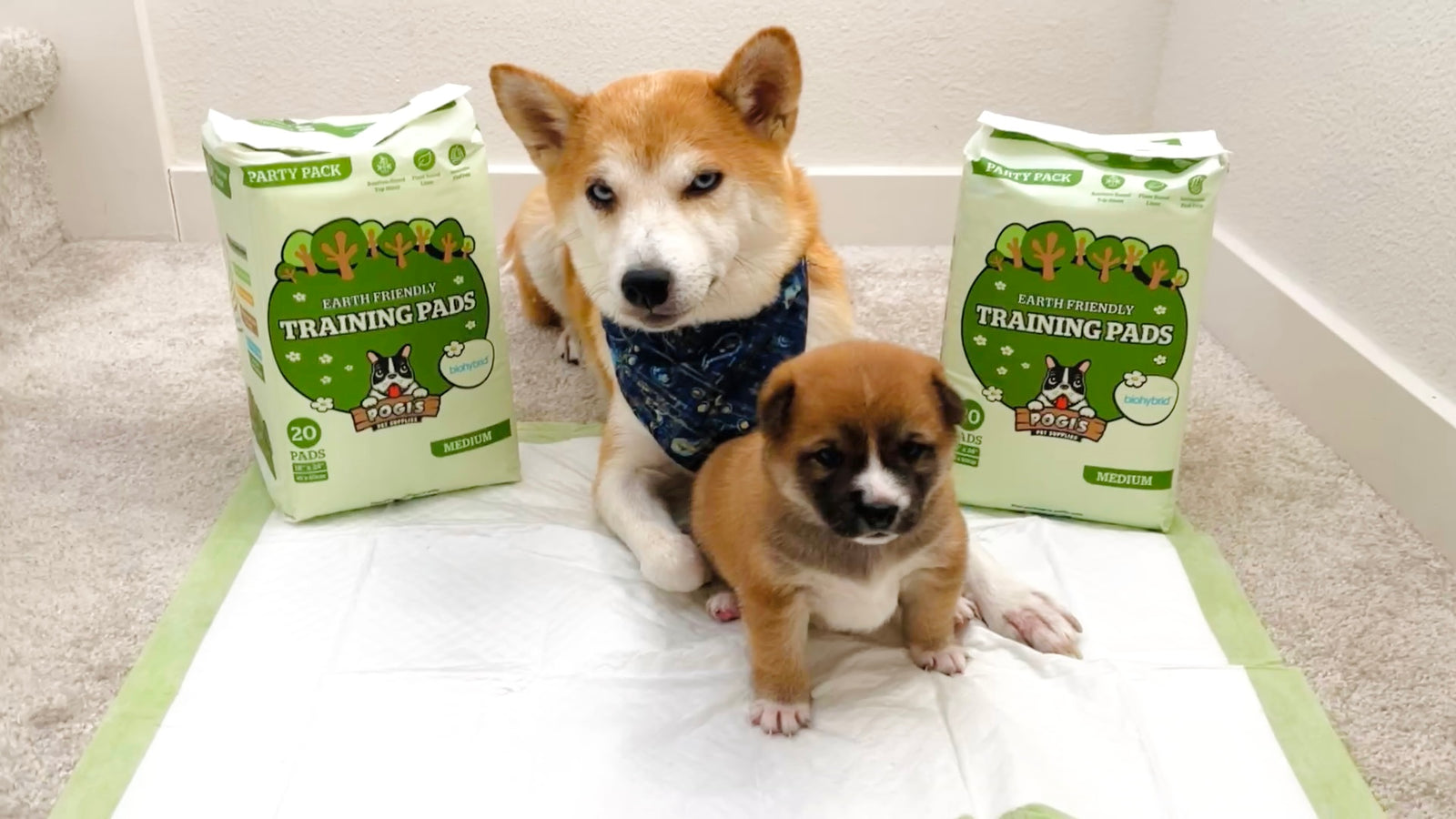
Few things are as loveable, vulnerable, or charming as young puppies. But, they can also be a lot of work to house train.
Consequently, many first-time owners frequently find themselves asking exactly how long it takes to house train a puppy. Luckily, here at Pogi’s, we have our fair share of experience on the matter.
The short answer is that it takes anywhere between four to six months to house train a puppy. But as anyone who has ever owned a dog will tell you, in practice, it’s more complicated.
Like people, all puppies are different. Various factors contribute to the time it takes to house train a puppy. These include:
- Breed
- Personality
- Training technique
- Owner experience
- Consistency in training
In other words, a lot goes into house training your puppy.
Other House Training Considerations for Puppies
As mentioned, various factors contribute to the time and effort all of this will take.
Personality
Of these, personality is a significant factor and one often overlooked by new puppy owners.
Take, for instance, the dachshund. The popular perception is that they’re unintelligent. In fact, they’re brilliantly clever but possessed of more stubbornness in their left little paw than the proverbial mule ever displayed.
That makes it significantly harder to train a dachshund, with its propensity for independent thinking, than the famously well-heeled poodle.
Owner Experience
Unsurprisingly, if you’ve never tried to house train a puppy before, it’s going to take you longer than the owner that’s been doing it for years. That’s because you’re learning along with the puppy.
And if you live in a multi-person household, it may take longer still since different family members will approach the house training experience differently. Not to mention, a few family members breaking the rules and sometimes handing out treats left and right.
Since consistency is the stuff well-trained dogs are made of, make sure you and your family agree on how to house train the puppy. Discuss:
- How long you take the puppy outside
- When the puppy goes outside
- How you reward the puppy
- What house training technique to use
How Long to Take Your Puppy Outside
When you’re house training a puppy, it’s important to distinguish between exploring expeditions and bathroom trips. This isn’t the time to start snuffling every fern, tree, and potted plant.
To help focus your puppy on house training, set a time limit on his toilet breaks. If he hasn’t done anything after 15 minutes, take him back inside.
Once inside, you will need to supervise your puppy. They are chancers, who are still testing the boundaries to see what they can get away with. If that means peeing on the hardwood floor on a wintry morning, they’ll try it. Especially if it keeps them warm and dry.
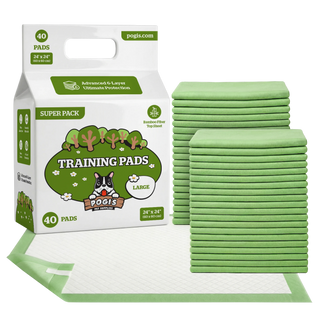
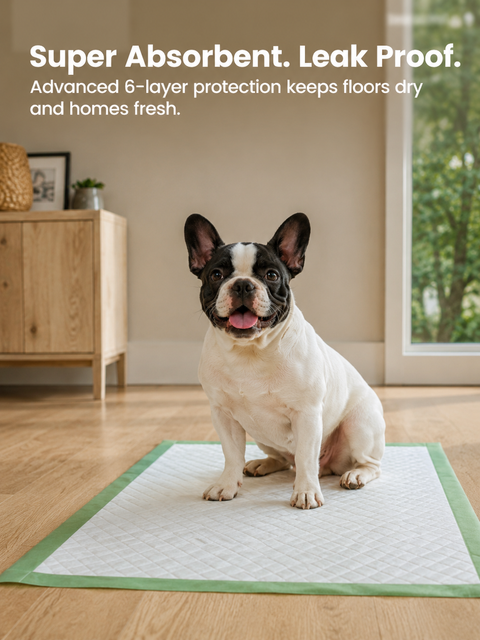
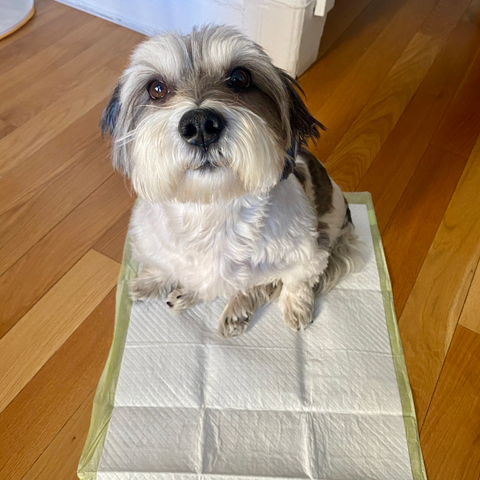
This is why we recommend training pads. These are not only ideal for any size dog but have a honey-based attractant that helps your pet mark the spot without missing. You can also choose to add adhesives that keep these pads in place.
To avoid this kind of accident, though, send your puppy immediately from outside to his crate. He doesn’t have to stay there long because you will take him out again 15 minutes later to encourage him to try again.
When house training a puppy, repeat this 15-minute interval staging until your dog successfully does his toileting outside. It may take a while and it will almost certainly be frustrating. But it will be worth it for a thoroughly house-trained puppy.
What Time to Take Your Puppy Outside
The other thing that’s crucial to successfully house training a puppy involves understanding when your puppy needs to go outside.
Puppies are still growing, and their organs are proportionately small, so you may find they need frequent bathroom breaks. Being consistent about when you take your puppy outside will help speed up the house training process. So will understanding when they are most likely to need the toilet.
In particular, you want to encourage your dog to do his business outside:
- When it wakes up
- After meals
- After playtime/naps
If you’re finding house training your puppy takes longer than expected, encourage your puppy to use a specific part of the yard for his business. Designating one area as the dog’s toileting area might help him focus and reduce distractions.
Initially, you should only train him in your yard (if applicable) in order to have them used to go in a particular part of the yard. If you take him to a park, this will be much more difficult. Be sure to bring the right wipes and poop bags.
How You Reward Your Puppy
Like people, dogs have many and varied personalities. Some are food-motivated, while others relish playtime. That means a one-size-fits-all approach won’t work when it comes to rewarding your puppy.
Treats are the traditional reward when house training puppies, but if your dog is indifferent to food, that won’t encourage her to put in the extra effort. As you’re house training your puppy, get to know her personality and adjust your training accordingly.
If your puppy has a favorite toy, use it to reward her for successful toileting. The important thing is that you learn what works and use that knowledge to develop incentives that promote successful house training in your puppy.
What Technique to Use to House Train Your Puppy
Just as there are various ways to reward a dog, there are also several popular house training techniques. These include:
- Crate training
- Newspaper training
- Pee pads
What you choose is up to you, and ultimately, shouldn’t affect how long it takes to house train your puppy, provided you’re consistent about it.
Additionally, as your dog gets better at outside toileting, make sure to learn his signals to tell you he needs to go. Some dogs are natural barkers, but some practice the ‘Silent Sit’ and will wait patiently by the door until you notice…or they give up and redecorate your curtains.
Watch for:
- Circling
- Whimpering/ whining
- Pacing
Learn to recognize your dog’s behavior when asking for the bathroom and react promptly. And don’t forget to have a treat ready.
Join Pogi’s Pack
A cleaner spot indoors
Get 15% off a one-time purchase
One use per customer. Subscription items excluded. Cannot be combined with other discounts.
Offer sent by email. Unsubscribe anytime.
Routines are Vital
Whatever method you opt for, consistency is vital. Dogs are people-pleasers and respond effectively to praise as well as scolding. Inconsistency confuses them because it blurs the line between what is and isn’t allowed.
You can help speed up the time it takes to house train your puppy by creating and sticking to a routine. Taking it outside at the same time, for the same length of time, will have it peeing outside within that projected four to six months.
When house training your puppy, however, you house train it, you are perpetually trying to enforce two basic concepts:
Never eliminate in the house
Always eliminate outside
If you catch your dog trying to do its duties indoors, immediately move it outside.
Getting Started
While it’s possible to house train a puppy in four to six months, don’t be surprised if it takes longer. Puppies can be mischief personified, and they’re keen to see how much they can get away with while charming you into next year.
But consistency, training, and rewarding a job well-done should have your puppy house trained if not in no time, then at least with efficacy. In the meantime, laugh at the misadventures, celebrate the successes, and enjoy the dog days of puppyhood.
For more information on puppy training, daily tips, and dog supplies, be sure to browse through our site to learn more.
A clean spot indoors
For puppies in training, seniors, or long workdays, Pogi’s Dog Training Pads give your dog a leak-proof spot indoors, with a quick-dry top and a backing that actually protects your floor.