Puppy pad training is challenging when you don't exactly know what to do. There’s an array of strategies and techniques that can help you out, but overall, consistency in potty training is key.
Breed matters a lot when looking at the timeline for house training a puppy. Generally, six months is a reasonable timeline, but this depends on many different factors.
Experts recommend that you begin training your puppy once it hits eight weeks old. At this time, a puppy is grown enough to control its bladder and bowel movements and can learn to hold it for a longer time.
Puppy Pad Training Tips
Below are some tips on training your puppy on how to use puppy pads.
-
Select an Appropriate Sized Puppy Pad
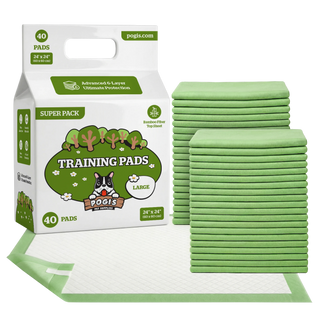
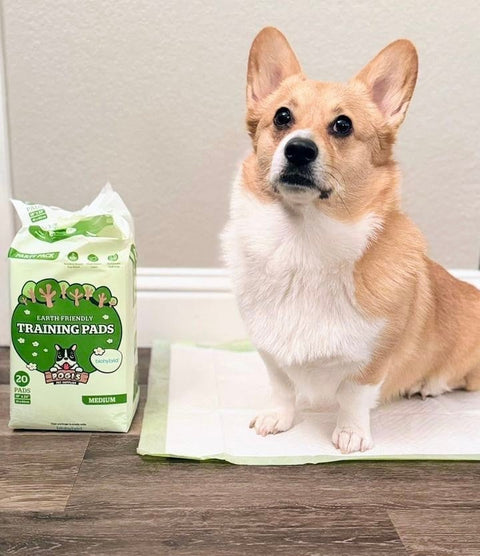
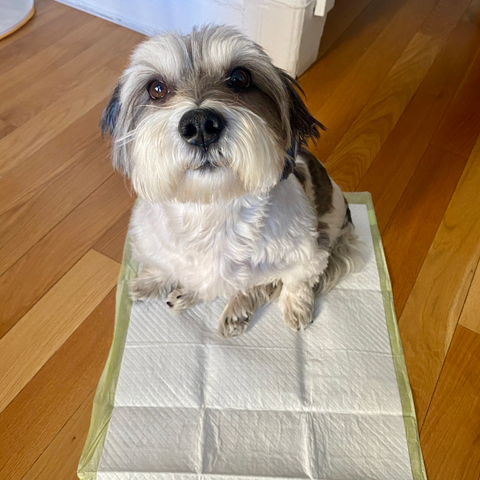
Choosing the right potty pad is essential. You will need something absorbent and large enough to hold all messes. Large breeds will require bigger pads than smaller breeds, but they come in sizes from small to extra, extra-large, so there should be no issue when looking for one.
-
Select a Specific Potty Area
A puppy can learn quickly when you take them to the same place. The potty spot should always be away from foot traffic, so in the corner of a room would be perfect! If you have kids, ensure that they don't interfere with it either.
When you're busy or away from home, and you can't watch your puppy, leave many pads covering the room that they are in. This way, they still get the process of going on the pad even though they don’t have to go to a specific spot. Carry out this procedure for three days and start taking away a few pads.
Repeat the process until you're left with only one pad in the entire room. Then, when the puppy eliminates outside the pad, add some pads in the room until it goes in the right place.
-
Formulate a Routine
Puppies are like babies, and they do their best when on a regular schedule. It is said that puppies can hold their bladders for one hour for every month old they are. So, for example, a two-month-old puppy can hold pee for two hours.
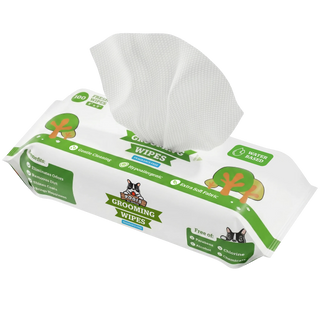
While exercising innovative puppy pad training, don't go longer than two hours between bathroom breaks; otherwise, an accident is more likely to occur. In addition, the routine will help the puppy understand the time to eliminate. Also, ensure that the pads are in a place where the puppy can access them without any struggle. Lastly, keep grooming wipes on hand to clean up any messes at the moment.
Not sure how to space the breaks? Our puppy potty-training schedule generator builds a schedule around your puppy's age.
-
Understand Your Puppy’s Signs
Always be watching for signs that your puppy needs a bathroom break. These signs include scratching at the door, barking, squatting, sniffing around, whining, or circling. Grab the leash when you notice these signs and take them to your chosen elimination spot. If they successfully go to the right place, reward them with a treat.
If your puppy does not go on the puppy pad, wait for a few minutes, then take them back in a few minutes and see if they will go. It is best to keep a chart of when the puppy goes or doesn’t go. Then, figure out when your puppy needs to be taken to the potty pad. Sounds tedious but an ounce of prevention is worth a pound of cure.
-
Take Your Puppy to the Bathroom Frequently
Puppies feed up to five times a day, depending on their age, breed, and size. As such, the adorable young dogs are likely to cause accidents several times a day. That means that if you’re not careful enough, the pup may mess up in the most unexpected areas.
With that said, make it a routine to take your puppy to the bathroom at least every two hours. Pick a phrase that reminds your puppy that it's time to poop. The strategy will help your puppy learn using the potty pad more quickly.
-
No Water, No Food for Puppy Before Bed
If your pup goes to bed on a full stomach, the high chances are that they won't take long to go from whining to eliminating. Clear the feeding plate and withhold water about two hours before bedtime. The technique will help you take the puppy to eliminate and drain their bladder by bedtime.
Puppies sleep for approximately six hours without requiring a bathroom break. But if your pup wakes up at night, don’t hesitate to take them to the potty pad. You want to make sure that most lights are off and that you’re not playing with them. Otherwise, they may not go back to sleep. Also, it might help to know that the non-interrupted sleep elongates sleep time, helping them grow fast and healthy.
On a different note, make sure that Spot uses the puppy pad before going to sleep. This can be one of the most important steps when training your puppy as it will instill a go-potty discipline and prevent any messing happening with the bedding.
-
Help Your Pup “Go Potty” Every Morning
Make it a routine to take your puppy to the bathroom every morning. A consistent schedule is key in training your help to go in the right spot whenever they want to go.
Puppies are like young children in many ways. For example, they usually pee in the morning after waking up. And that presents the best chance to instill potty training skills when they naturally go.
Sometimes, you may be able to skip on directing the puppy to the bathroom. When they are about to make a mess in the wrong place, quickly take them to the pads to show where they need to go. Repeat this process every day, as needed. It won’t be long until your pup visits the room on their own.
-
Interrupt Accidents
It’s important that you interrupt any attempt to go to the bathroom if they’re doing it in the wrong place. To do so, you can make some gentle noise or clap your hands quickly but softly, taking care not to scare your fur companion. The intention is to show that they need to use the right place, so try to lead them to their potty pads.
If you want your puppy pad training to be successful, don't punish any mishaps that happen. After all, they are young and don’t understand that making a mess in the wrong place is actually a bad thing. So, do what you can to reassure your pup, make them feel safe, and guide them to where they need to go whenever an accident happens.
Ultimately, a puppy thrives on gentle teaching and positive reinforcement. Yelling or any other kind of negative reaction can be counterproductive. As well, try to keep the potty training sessions as brief as possible since puppies tend to have short attention spans.
-
Identify the Challenges and Immediate Solutions
If your puppy can’t reach the bathroom in time, you might want to place some pads closer to avoid any messes happening along the way. These should be the same color and size as the pad that you use in your bathroom.
One solution to avoiding any accidents is to put a bell on Spot. It might sound unusual, but it can help you know where your puppy is at all times.
Not surprisingly, dogs don't like to make waste where they usually sleep. That said, you can put your dog in the crate and keep a close eye to see when the puppy moves out to find somewhere to go. Then, all you have to do is direct them to the potty pads and ensure they’ve done their business.
-
Supervise
During their training, it’s vital to supervise your pup whenever they use their pad. Otherwise, they may go in the wrong spot, and no one will benefit from that. So, whenever you notice it’s time, look to use gestures that’ll tell them to “go potty.”
But how do you tell when it’s time? Thankfully, there are lots of signs to be on the lookout for, such as restlessness, especially after eating or playing for long periods.
-
Reward Your Dog After He Eliminates
Make sure your little furball gets all the treats and praises whenever they use their potty pad appropriately. It’s best to recognize when they’re behaving well immediately since you’ll want to let them know that they’ve used the pad correctly. To help with this approach, you could always have a bowl of treats on hand to give out when needed.
Join Pogi’s Pack
A cleaner spot indoors
Get 15% off a one-time purchase
One use per customer. Subscription items excluded. Cannot be combined with other discounts.
Offer sent by email. Unsubscribe anytime.
Potty Pad Training at a Glance
Confining your puppy in an isolated space when it’s time to go is one of the best potty training techniques. That can help make it easy for them to learn to do their business in a specific spot.
When potty pad training, it’s super important to try and anticipate when you suspect it's time for Rover to go. Once he does go, try to hold on to them, so they don’t go play and run around.
Training a puppy to use a pad will take consistency, patience, and commitment. Of course, accidents are bound to happen, and they are an unavoidable part of the training process. While it might take a few weeks for your pup to learn, it will be worth it in the long run.
For more information and tips on puppy training and supplies, be sure to browse through our website.
A clean spot indoors
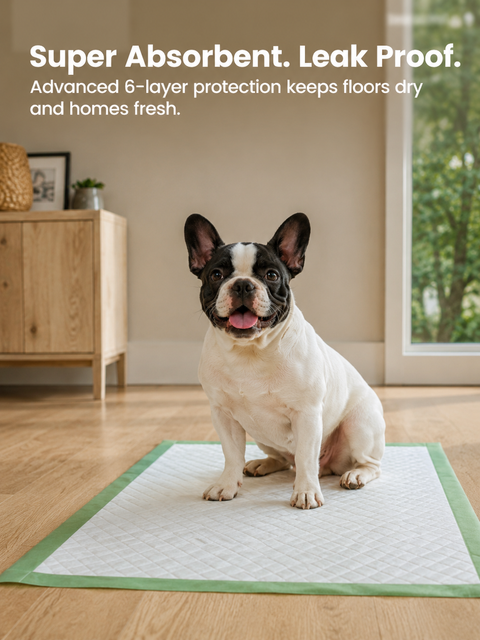
For puppies in training, seniors, or long workdays, Pogi’s Dog Training Pads give your dog a leak-proof spot indoors, with a quick-dry top and a backing that actually protects your floor.